

One business. One operating system.
Custom Software
When a business grows faster than its tools, work falls into spreadsheets, chat threads, and memory. We bring the moving parts into one system, starting with the workflow costing you the most time or money.
What it looks like
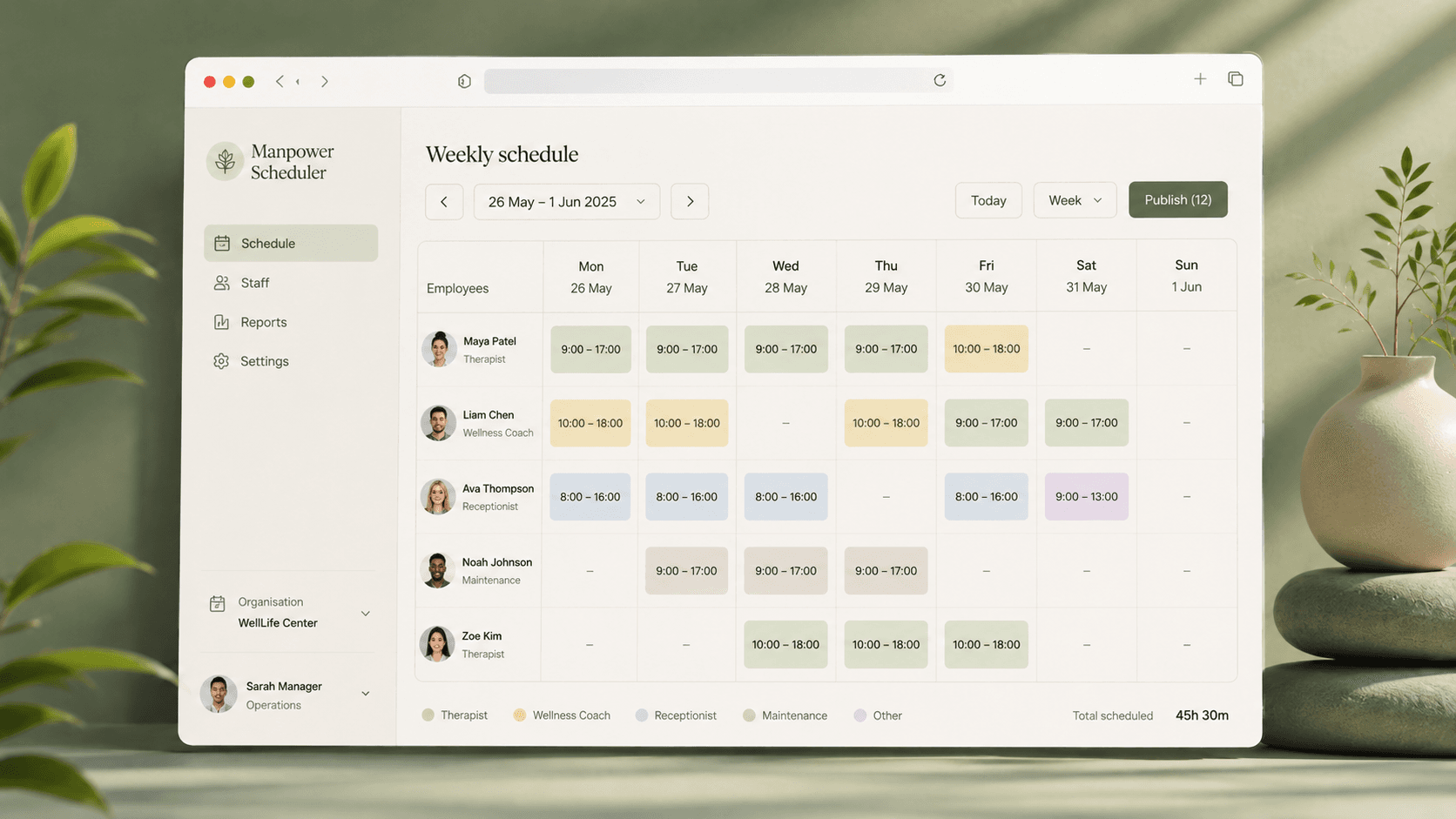
How many hours does someone spend every week rebuilding a roster that was right last Tuesday?
Where things get stuck
- Three hours, every week. The roster is rebuilt from scratch in a spreadsheet whether the week is busy or quiet
- Changes ripple by hand. One swap means retyping, re-checking and re-sending the whole sheet
- Staff find out late. The roster reaches people as a screenshot in a group, and the question is always which version is current
What gets built
- Build once, adjust. The roster keeps last week's shape, so you change what changed instead of starting over
- Shifts land in WhatsApp. Each person gets their own shifts in the chat they already use, no new app to learn
- Clashes show themselves. Double bookings and leave conflicts are flagged before the roster goes out
What you get back
- Hours come back every week. The roster takes minutes, not an afternoon
- One version, always current. Everyone reads the same roster, and a change reaches everyone at once
- Nobody learns a new app. Staff keep using WhatsApp; only the roster stopped being manual
Ideal for
SMEs where the workarounds have become the bottleneck, and where off-the-shelf software either does not fit the process or costs more to bend than to build.
Might not be the right fit
Businesses that need something running next week, or teams still deciding how they work. If the process is not settled yet, a Manual Work Map costs far less and tells you more.
A weekly roster built in a spreadsheet costs the same three hours every week whether the week is busy or quiet. That is nineteen working days a year spent rebuilding something that was already correct last Tuesday.
What this can include
Start with the bottleneck, add the rest when it works
A build can include any of these parts. Most clients begin with one costly workflow, then expand from a stable foundation.
Sales & CRM
Every enquiry. One clear next step.
System Integration
Enter it once. Use it everywhere.
Process Automation
The routine work should run without chasing.
Dashboards & Reporting
One version of the business, updated live.
Practical AI
Give AI one useful job.
WhatsApp Automation
Every enquiry gets a clear next step.
Packages
Choose the scope that fits the problem
These are common starting points. We price the work by what needs to be built, not by the size of your company.
One workflow
Replace one manual process that keeps slowing the team down.
From RM 8,000
- One workflow rebuilt from start to finish
- The spreadsheet or manual handoff replaced
- Your existing data moved across
- Your team trained as we build
- First version live in 4 to 8 weeks
- The source code belongs to you
Connected system
Bring several workflows and tools into one system.
From RM 15,000
- Several workflows connected from end to end
- Accounting, stock, store, and existing tools linked
- Documents and reports generated automatically
- Live numbers for every team, on desktop and phone
- Delivered in phases you approve
- The source code belongs to you
Indicative pricing. Exact scope and price agreed before we start
Add on when you need it
- Care & maintenance
- Updates, backups, and someone to call.
- Extra training
- For new hires, after launch.
- More integrations
- New tools as you adopt them.
- Data cleanup
- Before we move it across.
How a build goes
01
Diagnose
We map the current work, find the most expensive bottleneck, and agree what the first phase must change.
02
Design
We agree the screens, data, and workflow with you before the build begins.
03
Build
The first phase usually ships in 4 to 8 weeks. You review working software throughout the build.
04
Grow
Once the first phase is stable and useful, we agree whether the next workflow is worth adding. You own the code throughout.
FAQ
FAQ
Each phase is a fixed scope at a fixed price, agreed before it starts, and you can stop after any of them with something working in production. You are never one big payment into a system that does not exist yet.
Often you should, and we will tell you when. We build when the gap between what the software does and how you actually work is where all the manual effort lives, because that gap is already on your payroll.
Then we build one piece. Most clients start with whatever is bleeding the most, get it stable, then add the next. Buying all five at once is nobody's first project.
You keep everything. Source code and deployment access sit in your own accounts and are handed over at the end of every phase, not at the end of the relationship, so you can move to another developer whenever you want. Nothing is held hostage.
Working software within the first few weeks, first phase live in four to eight. If you cannot picture what we would build yet, that is exactly what a Manual Work Map is for.
Which of these sounds like your business?
Same work, different companies. Open the one you recognise and see what it takes to remove it.
Manual Work Map
Know what to fix before you pay to fix it.
Sign you'd want this
You know something is slow or painful, but the team cannot agree on what the real problem is
Websites
Make the next step obvious.
Sign you'd want this
The site looks polished but does not explain why customers should choose you
Which part of this is your problem?
Two or three sentences is enough. We will tell you what the first useful phase looks like before you commit to a build.